Nuisance Algae Guide, A work in progress
Okay, so unless you have a nuisance macro algae that is complex and not normal, we hopefully got you covered. We need photos to continue the thread, send them in.
The Common Pest Algae. (Diatoms, Hair, Film, and Cyano)
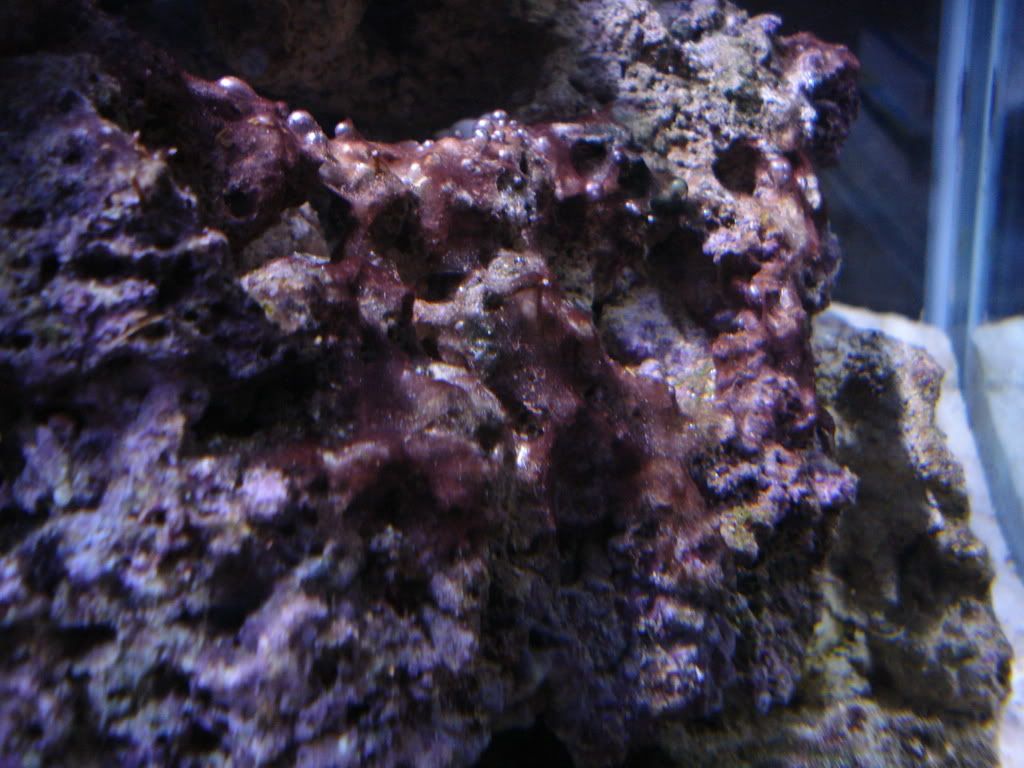
Cyano:
Slime Style:
Powdery Nasty Mess on Sand Style:
Scientific Description: Red slimey mess. Can be long and stringy, can be brownish, can be powdery on your glass or rocks.
Manual Removal - wipe glass with mag float, etc... Light toothbrush harder corals covered and gorgs, and the rocks. Stir sand and siphon
Clean Up Crew- Ceriths, Nerites and Blue Legs
Why it happened - too much phosphate, and you probably have a phosphate imbalance. Meaning you probably have less than a 20:1 N:P ratio. Alkalinity may be a factor too.
Starving it out - Use a phosban reactor or a macro like chaeto to take down phosphate. If you have a nitrate problem too, you can add more live rock or rubble to the tank, do some more wcs, add macro, add dsb, etc...
John's Tip - Increase the flow in your tank to take care of dead spots. Are you using RO/DI? Either way check your source water for phosphates.
---------------------------------------------------------------------------------------------------------------
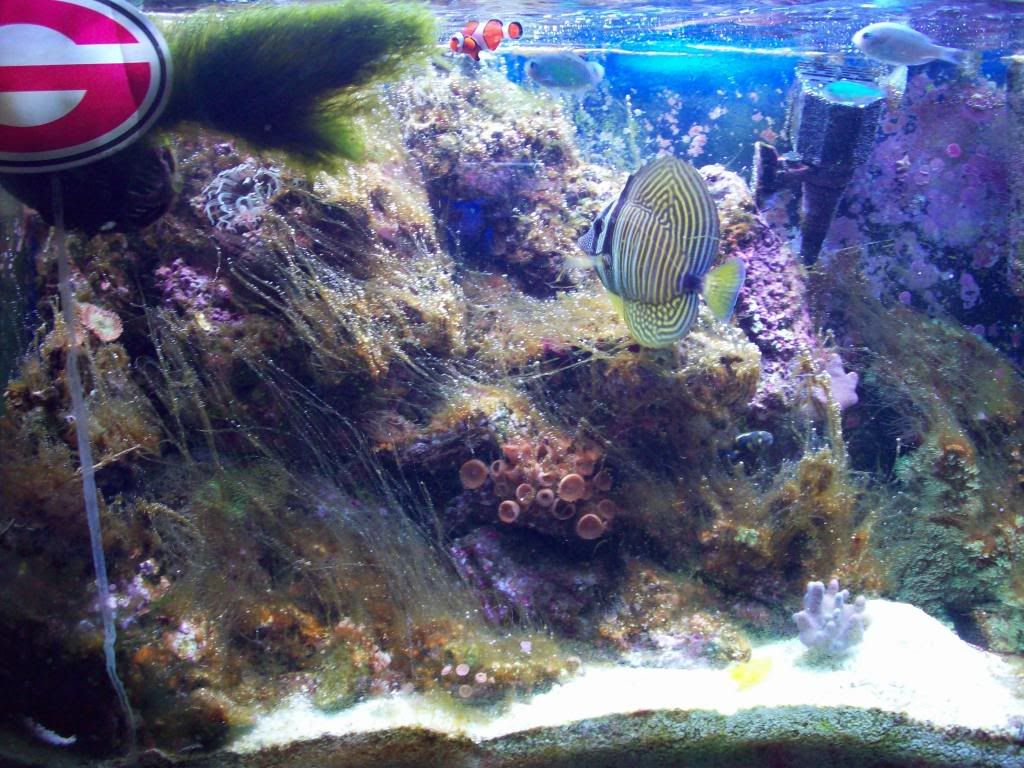
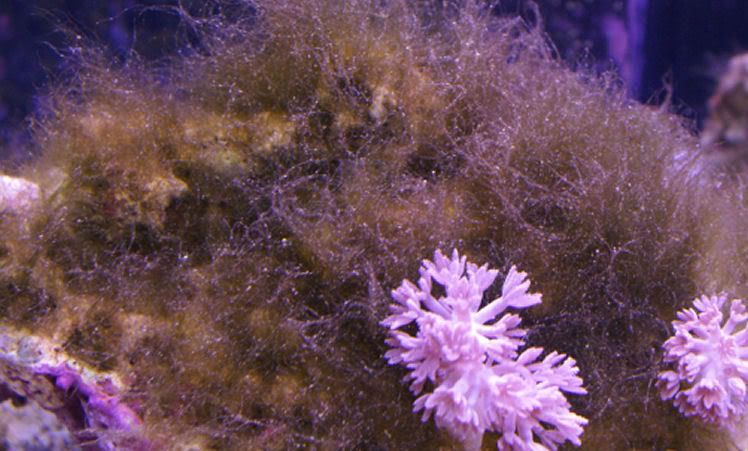
Hair Algae:
Can also appear brownish like this:
Scientific Description: A variety of green filamentous algae are lumped together under Green Hair Algae, because identification requires a microscope.
Manual Removal - yank it out. If it is growing from the sand sift it out with a net.
Clean Up Crew- Blue Legs, bigger hermits, turbos, limpets, chitons
Why it happened - too much nutrients, both phosphate and nitrate.
Starving it out - Use a phosban reactor or a macro like chaeto to take down phosphate. If you have a nitrate problem too, you can add more live rock or rubble to the tank, do some more wcs, add macro, add dsb, etc...
John's Tip - Older light bulbs grow more hair algae as they drift towards the red spectrum.
----------------------------------------------------------------------------------------------------------------
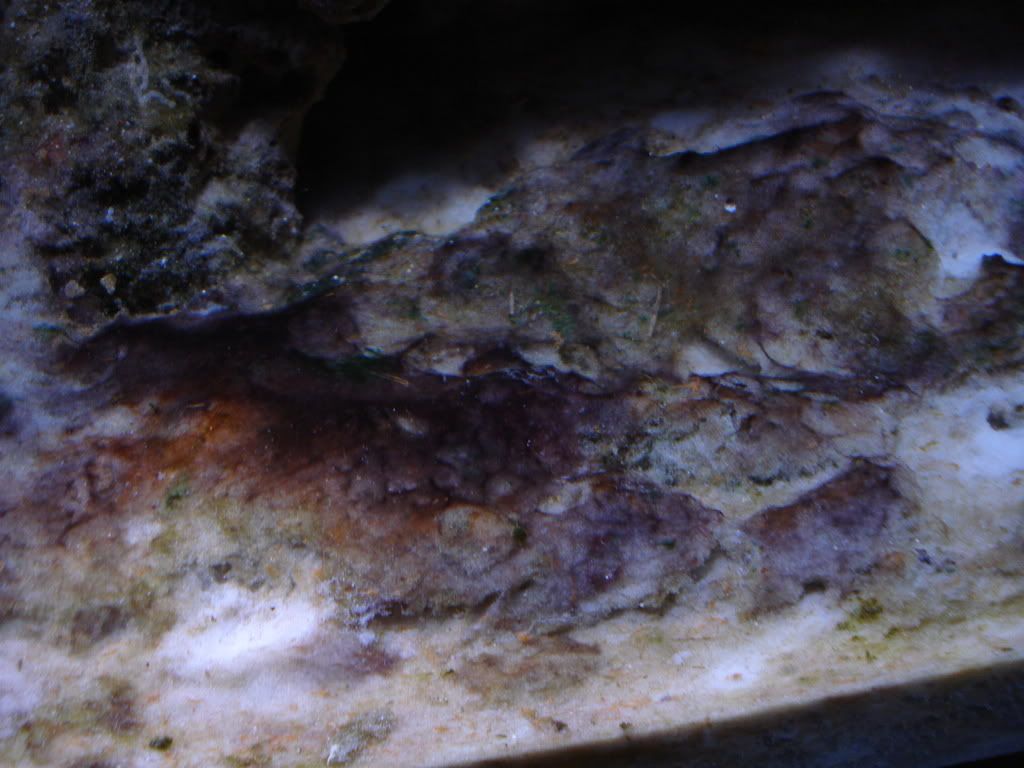
Diatoms:
Scientific Description: Brown Powdery like substance that can cake in extreme cases like the one above. Usually occurs right after a tank finishes its cycle.
Manual Removal - wipe glass with mag float, etc... A blast from a turkey baster takes care of rocks. Stir sand and siphon.
Clean Up Crew- Ceriths, Nerites and Chitons
Why it happened - bio available silica, probably from sand or rock or something plastic your recently added to the tank.
Starving it out - Diatoms starve themselves out, just try to keep something eating it in the mean time so it isn't so ugly as it slowly removes the silica from your tank.
John's Tip - Pods love diatoms. Left with no predation from fish, and a steady supply of diatoms over a month's time, (you do this by keeping the diatoms under control), you should be able to see rapid pod maturation in your tank.
---------------------------------------------------------------------------------------------------------------
Byropsis sp.
As you can see in distant pictures it looks very similar to hair algae, and the two are often confused. Here is a link to a picture of Byropsis pennata, that is close up:
Notice the feather detail on the algae. This is what you are looking for in your tank to confirm or deny identification. If you do have it be prepared for a fight:
1. Try to get on it quickly. If it is only on one rock remove the rock, remove algae, starve of light in a QT.
2. Manual Removal - If that doesn't work or get it all, remove all you can by hand. People will tell you not to do this because it will spread. Let me assure you, left untreated byropsis will spread. Just be careful about it, and if you can pull the rock out to remove it all the better. If takes hold in the sand sift it out with a net. If you don't remove the base of byropsis you are wasting your time.
3. Starve it out - As always if you can get down nutrients nuisance algae has a harder time taking hold, or coming back after manual removal.
4. Repeat steps 2 & 3 aggressively.
5. If that doesn't work try raising your magnesium to very high levels. I don't want to be blamed if this causes losses in your tank, many people have done this with great success and minimal stress, but still....please do your research and don't blame me if something goes wrong.I say QT. Here is a good article:
Reef Central Online Community - Finally an easy solution to bryopsis!
John's Tip: save your money on CUCs, if it is truly byropsis the normally sold CUC members, (in regular numbers at least), will not finish it off, only pick at it which is what we can do with manual removal in 2 minutes time. Opaque cutouts shaped to cover an area of byropsis can be put between the light source to shade them out. Remember fire and corrosion concerns, tupperware might work, but remember soap, chemical contaminant concerns.... Home Depot bucket lids make good cutouts.
-------------------------------------------------------------------------------------------------------------
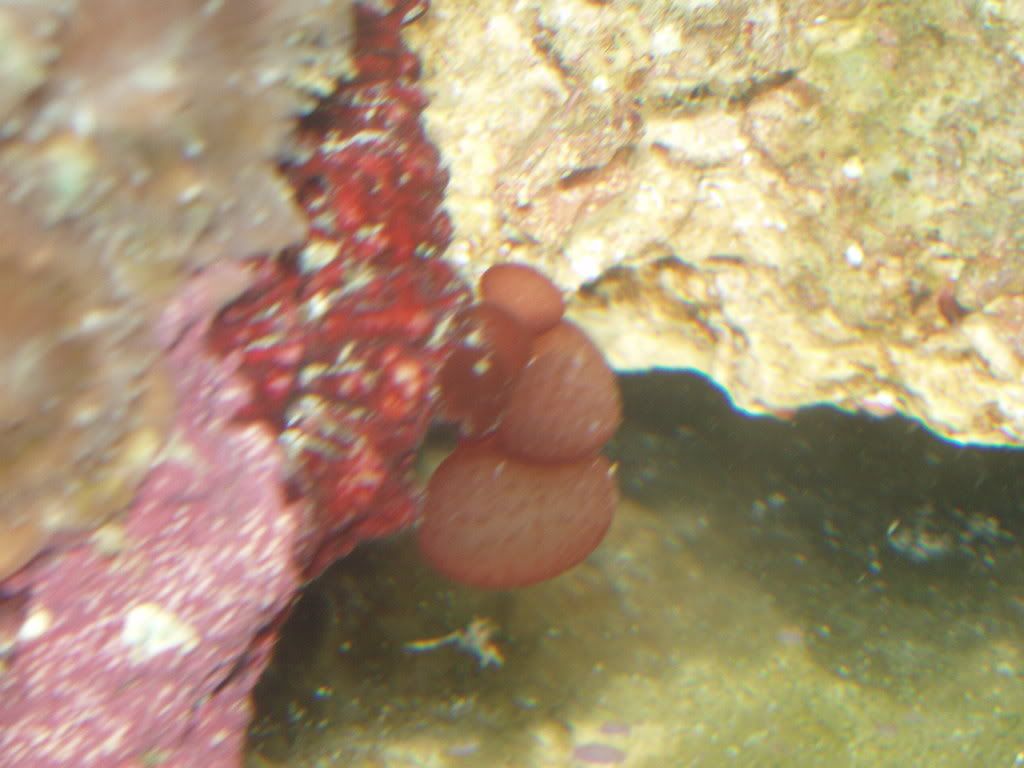
Bubble Algae
This is green bubble, one or more of the Valonia species:
Scientific Description: Almost cool looking, almost. Can have a metallic look to it. Once it takes hold it can grow very fast and dominate a tank in a month.
Manual Removal - Don't be clumsy and spread this one. Get em small, cover them with a baster, scrape the baster along the rock, when the Valonia comes off release the plunger and suck it up. Discard and repeat. If you have a lot to do, by the time you are done you will be ready to add new mixed water to complete the water change. Be aggressive with your manual removal.
Clean Up Crew- Emerald Crabs
Why it happened - You didn't quarantine, and you have available nutrients for it.
Starving it out - Use a phosban reactor or a macro like chaeto to take down phosphate. If you have a nitrate problem too, you can add more live rock or rubble to the tank, do some more wcs, add macro, add dsb, etc...
John's Tip - Juvenile Emeralds are better for the task, the smaller the better. Get one per handful amount of the bubble. (After aggressive manual removal, remember to limit based on tank size etc....that recommendation is only based on the bubble algae - it does not consider the crabs needs do your research, etc....)
-------------------------------------------------------------------------------------------------------------------
Lobophora sp. (Usually variegata):
Scientific Description- Brown semi rigid but slippery macro algae. Often confused with plating coralline, the slippery rubbery feel is a give away if you don't want to use scientific methods to determine the id.
Manual Removal - Difficult. Qting the rock in an extended dark cycle is the best way. Good thing it doesn't spread rock to rock too fast. A chisel or a flexible knife like a putty blade works, but you got to get it all, and take some of the rock just to be sure.
Clean Up Crew- Emerald Crabs (best bet here), Sea Hares, some Turbos, Chitons, Limpets, Tangs, Urchins, will pick at it, but it is likely to persist, but at least it will be controlled.
Why it happened - You didn't quarantine, and you have available nutrients for it.
Starving it out - Use a phosban reactor or a macro like chaeto to take down phosphate. If you have a nitrate problem too, you can add more live rock or rubble to the tank, do some more wcs, add macro, add dsb, etc...
John's Tip - Under the right lighting it can take on amazing colors. Also, it is not calcified despite its appearance.
http://www.com.univ-mrs.fr/IRD/atoll...es/lobovah.jpg


 Reply With Quote